
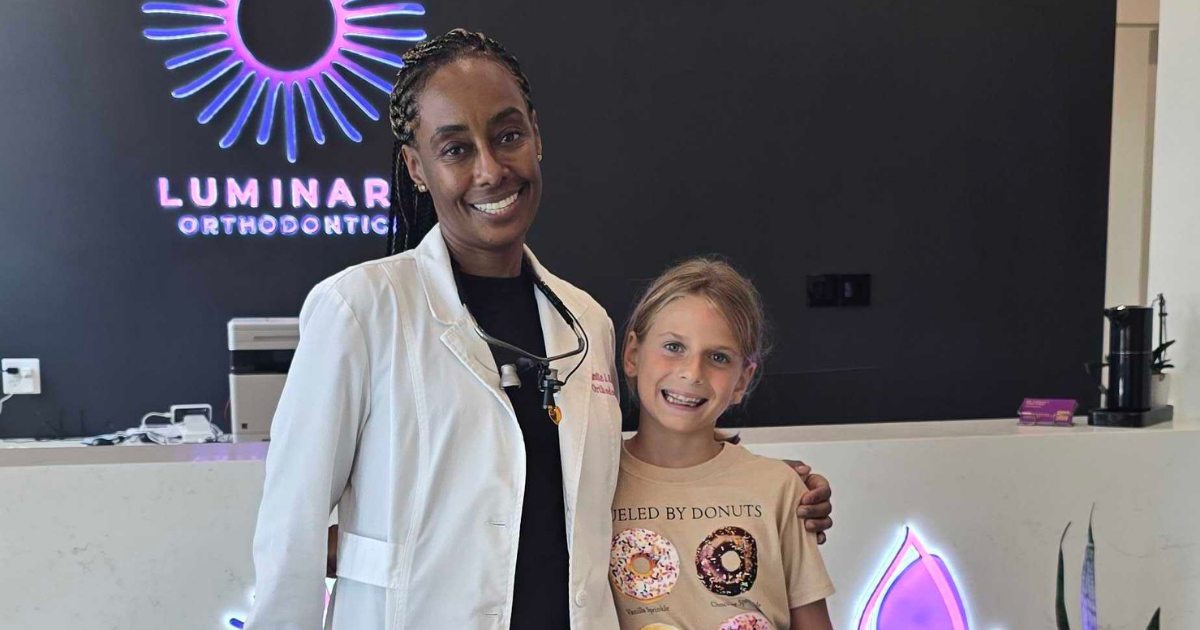
Intro
At age seven, your child’s smile is changing fast. This is when baby teeth and permanent teeth are both present—a window that gives orthodontists the clearest early view of how teeth and jaws are developing. That’s why the American Association of Orthodontists (AAO) recommends a first orthodontic check-up by age 7. Early doesn’t mean braces now; it means knowledge now so you can make the right decision at the right time.
Why Age 7?
By seven, the first permanent molars typically have erupted and several front teeth are in place. With this mix, an orthodontist can evaluate:
- Bite relationships (overbite, underbite, crossbite, functional shifts)
- Tooth eruption paths (missing, extra, impacted, or misdirected teeth)
- Space and crowding (too little or too much room)
- Oral habits (thumb/finger/pacifier) that may be affecting jaw growth
- Jaw growth patterns that benefit from gentle guidance while a child is still growing
What Happens at the Visit
Your child’s visit is comfortable and informative. We review medical/dental history, examine the teeth and bite, and—when indicated—use panoramic imaging to see developing teeth below the surface. You’ll leave with one of two plans:
-
Observe: Most children don’t need treatment at 7. We simply monitor growth and eruption so treatment (if needed) starts at the optimal time.
-
Intercept: If a specific problem benefits from early action, we’ll discuss targeted options. Examples include: expanders for crossbites, limited braces to create space for erupting teeth, or appliances to curb harmful habits. Early care is brief and focused—aimed at preventing bigger issues later.
Signs Parents Can Watch For
-
Early or late loss of baby teeth
-
Difficulty chewing or biting; teeth that don’t meet normally
-
Mouth-breathing or speech concerns related to tooth position
-
Crowding, spacing, or teeth that are “stuck” or off-path
-
Jaws that shift to one side when biting; underbite/overbite
If you notice any of these—or even if you don’t—an age-7 check-up is still the best way to be sure your child is on track.
The Benefits of Starting With an Evaluation (Not Necessarily Treatment)
-
Right timing = better outcomes. Monitoring lets us begin treatment only when growth or eruption timing will make it easier, faster, and more predictable.
-
Conservative by design. Interceptive care is used only when it prevents a larger problem—think guided jaw growth or making space for teeth that would otherwise get impacted.
-
Peace of mind. Parents know what to expect as adult teeth come in—no surprises.
-
Kid-friendly, tech-forward evaluations designed to be calm and efficient.
-
Personalized timing plan: observe or treat—always based on your child’s unique growth and goals.
-
Clear next steps: you’ll receive a simple summary and, if needed, a treatment roadmap that fits school and family life.
FAQ
Do most 7-year-olds need braces right away?
No. Many children simply enter an observation program and return for periodic growth/eruption checks until the timing is ideal.
If my dentist didn’t refer us, can we still come?
Yes. You do not need a dentist referral to see an AAO orthodontist.
What problems can early treatment help?
Crossbites, underbites, functional shifts, severe crowding/spacing, abnormal bite contacts, and habits affecting jaw growth.
Is the evaluation covered or complimentary?
Yes, our Smile Analysis Consultations are complimentary evaluations; call us to learn about current options.